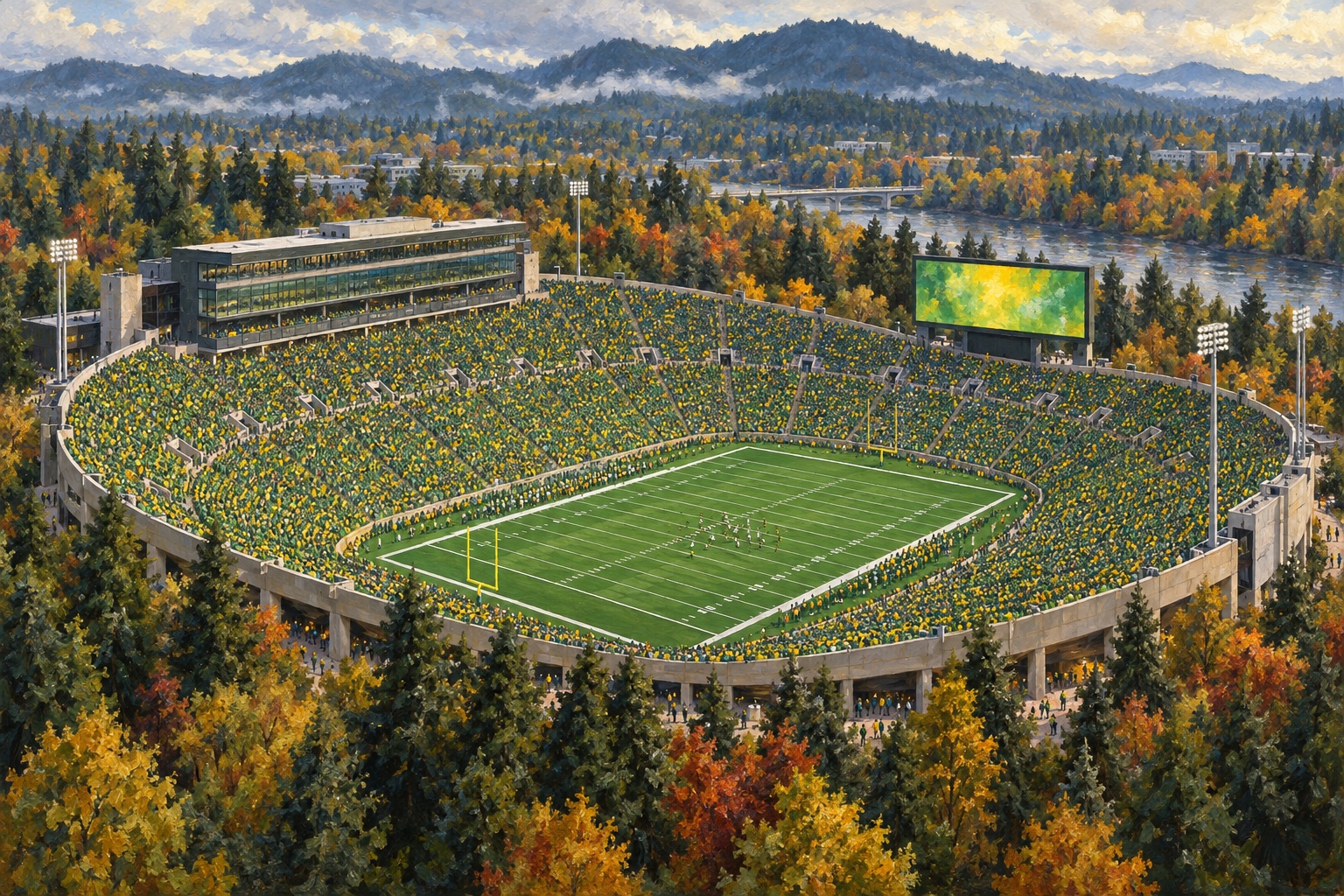
Demond Williams Jr. gave Washington a 65-yard touchdown run and a late tying touchdown pass against Indiana. Oregon just held a second straight opponent to seven points. That’s the question at the heart of this rivalry: can Williams create enough offense outside the routine plays to keep the Huskies close, or will the Ducks make Washington work too hard for every scoring chance?
Washington has more than one way to stay alive
The Huskies’ 27-24 overtime win over Indiana wasn’t just a fortunate finish. Washington outgained the Hoosiers 443-392, Williams passed for 227 yards and rushed for 88, and Jayden Limar added 77 on the ground. Dezmen Roebuck supplied a dependable outlet with 10 catches for 92 yards. That mix matters against Oregon: Williams needs help moving the chains so that every possession doesn’t depend on an escape or a deep throw.
Washington also found an answer when its straightforward offense wasn’t enough. Roebuck’s 27-yard trick-play pass to Chris Lawson helped set up Williams’ tying touchdown throw with 3:34 left. The defense then allowed only six yards on Indiana’s overtime possession. Those are two different routes to keeping this game competitive—manufacture an explosive play, then make Oregon settle for a difficult finish.
The Huskies have won three of their last four games, including road wins at Nebraska and Michigan State. But those road victories came with 17 and 21 points, respectively. Washington has shown it can win a tight, lower-scoring game; matching Oregon touchdown for touchdown is a different assignment.
Oregon’s surge comes with a defensive foundation
The Ducks have won four straight, scoring at least 31 points in each, while allowing just seven apiece to Michigan and Michigan State. Their 45-7 win at Michigan State featured Dylan Raiola throwing for 234 yards, Brandon Smith rushing for 121 and two touchdowns, and Dakorien Moore making a one-handed touchdown catch. Oregon didn’t need one player or one kind of play to supply all its offense.
Still, that final score wasn’t all sustained offensive execution. A Michigan State punt-return fumble set up a field goal, and Oregon scored on a fake field goal before halftime. The Ducks earned those opportunities, but Washington can change the shape of this matchup by avoiding the short fields and special-teams breakdowns that helped Oregon pull away.
Williams has experienced this setting before: his first career start came at Oregon in 2024, when he completed 17 of 20 passes for 201 yards in a 49-21 loss. The useful reminder isn’t that history must repeat. It’s that efficient passing alone may not keep Washington close if Oregon controls the rest of the game.
Sharpest Bets Premium
Get our Washington vs. Oregon picks.
See our model's picks for this game, plus the projections and trends behind them. Use PREVIEW20 to get your first 3 days free and 20% off your Premium subscription.
What the spread asks Oregon to do
DraftKings lists Oregon as a 13.5-point favorite, a price that asks the Ducks to turn their current form into separation. We expect Oregon to gain roughly 100 more total yards, with about 62 yards of that advantage coming through the air. That gives the favorite a plausible path: sustain more possessions, force Washington into obvious passing situations and limit Williams’ chances to rescue drives with his legs.
The case for laying the points gets stronger if Oregon can contain Williams without giving Roebuck easy completions underneath. The reason to pass on the favorite is Washington’s ability to extend possessions and answer late, as it did twice in the fourth quarter against Indiana. For the underdog price to appeal, the Huskies need repeatable first downs—not another afternoon spent waiting for a trick play or a long quarterback run.
The total turns on Washington’s contribution
The total is 50.5. Oregon’s recent scoring makes the over easy to imagine, but the Ducks’ defensive stretch creates the opposite possibility: a comfortable Oregon performance that doesn’t produce enough combined points. We expect Washington to rush for roughly 84 yards. If the Huskies can’t beat that modest ground expectation, Williams may face too many long-yardage downs to keep the scoring moving.
An over becomes more attractive if Washington can combine ordinary chain-moving completions with Williams’ explosive runs, making Oregon keep answering. An under becomes more attractive if the Ducks force punts and Washington avoids giving away short fields. The distinction matters: Oregon controlling the game supports its spread case, but it only supports a higher total if that control becomes touchdowns rather than long possessions ending in kicks.
Watch Williams’ first few third downs
We’ll be watching whether Williams can turn pressure into first downs without needing a highlight play every time. If Washington keeps those drives alive, both markets become more interesting; if Oregon ends them quickly, the Huskies will need another round of late-game creativity. Visit the college football betting board to compare this rivalry’s spread and total with the rest of the regular-season finales.
Odds and projections are snapshots and can change. Wagering involves risk.
More matchups to explore


Unlock our Premium picks. Free.
Get our sharpest picks, team grades, and projected score in your inbox.