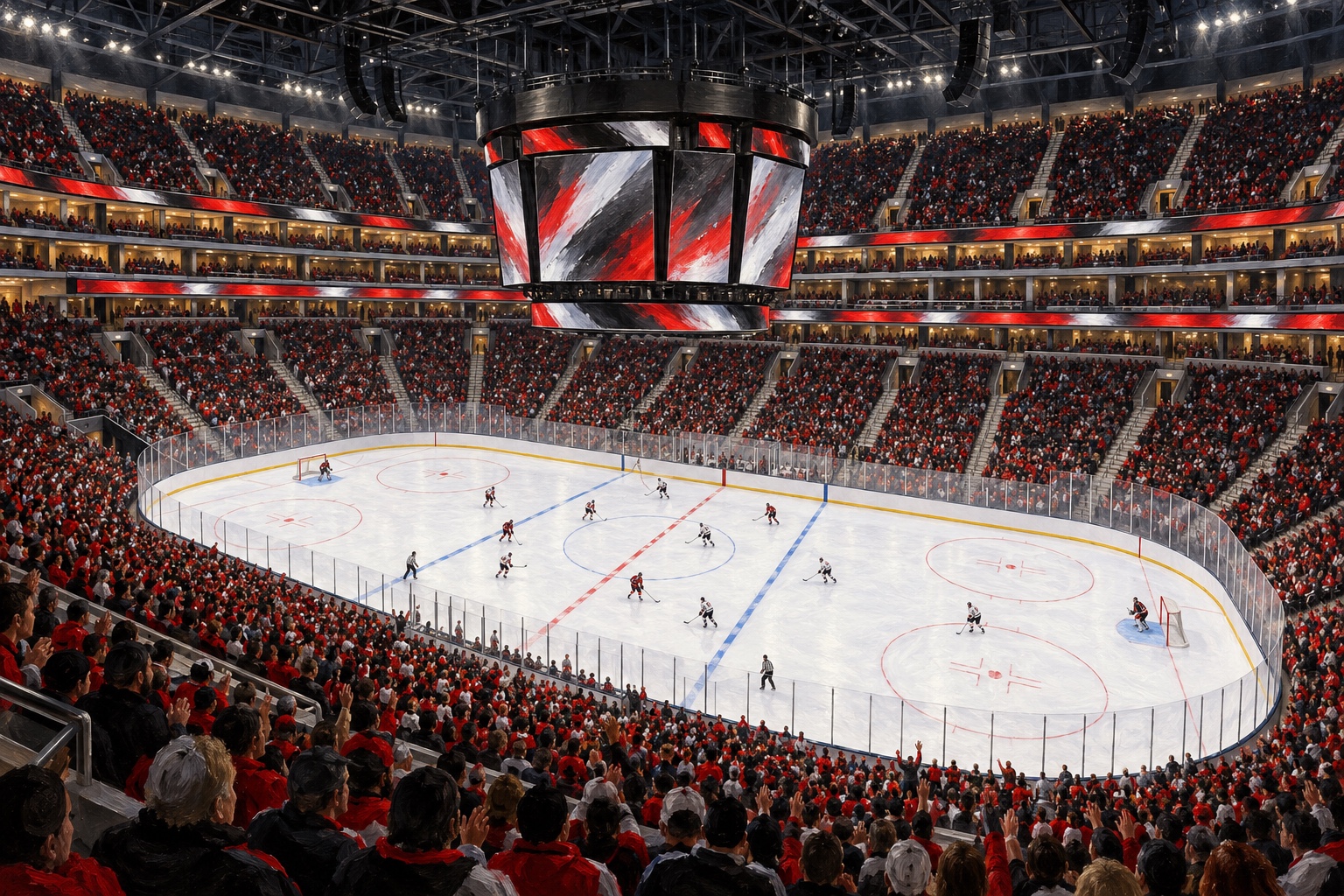
Buffalo got within one goal of Tampa Bay early in the third period, then watched the game unravel. Chicago’s last outing was effectively gone before the second intermission. Their meeting asks a more useful question than which team needs a rebound: can the Sabres turn their stronger attack into control, or will another shaky defensive night give the Blackhawks a way back in?
Buffalo showed a response, but couldn’t sustain it
The Sabres’ 8-3 loss to Tampa Bay wasn’t eight goals of uninterrupted surrender. Buffalo scored three straight, with Tage Thompson cutting the deficit to 4-3 just 33 seconds into the third period. Nikita Kucherov then answered with a natural hat trick. That sequence captures the problem heading into Chicago: Buffalo could generate a comeback, but couldn’t keep the next few shifts from undoing it.
The broader recent form doesn’t make the Sabres’ offense an automatic answer, either. They’ve lost three of four, scoring once against both Vegas and Ottawa, with a five-goal win over Columbus between those defeats. Chicago offers a chance to build more sustained pressure, but Buffalo still needs to show that its attack can travel on the second night of a back-to-back rather than arrive in short bursts.
Chicago needs offense before the game gets away
The Blackhawks’ 9-2 loss at Carolina extended their losing streak to six. Carolina scored four times in the first period and led 6-0 shortly after the midpoint of the second, when Chicago had only eight shots on goal. Connor Bedard and Roman Kantserov eventually scored in the third, with Alex Vlasic assisting on both, but those goals came after a 7-0 deficit. Chicago needs that involvement while the result is still in reach.
Chicago has scored two goals or fewer in eight of its last 10 games. That’s the obstacle to treating Buffalo’s latest defensive collapse as an easy opening for the home team. The Blackhawks have had four days between games while the Sabres played Wednesday, giving Chicago a different preparation window. Whether that shows up in earlier pressure—not just a late response—is one of the first things to watch.
Moneyline: Buffalo’s advantage still needs support
The moneyline has Buffalo at -155 and Chicago at +130. We project a shot-volume advantage for the Sabres, 28.4 shots to 24.8. That supports a game in which Buffalo spends more time testing the opposing goalie, but it doesn’t establish that those shots will be more dangerous. The case for paying Buffalo’s price gets stronger if it can sustain that pressure without giving Chicago quick answers at the other end.
Sharpest Bets Premium
Get our Sabres vs. Blackhawks picks.
Unlock our model's best bets for this matchup, plus projections, trends, and matchup analysis. Start with a free 7-day trial, then save 20% every month with code PREVIEW20.
The reason to hesitate is in net. Colten Ellis and Spencer Knight are the listed goalie possibilities, but neither is confirmed to start. Ellis has an .877 save percentage across his last five appearances, including relief work against Tampa Bay; Knight has an .860 mark across five appearances and allowed six goals on 17 shots at Carolina. If they start, Buffalo’s offensive advantage has a clear target, but its own recent goaltending leaves room for Chicago to stay competitive. Chicago’s price becomes more interesting if it can make Buffalo defend for longer stretches; the losing streak alone doesn’t tell us whether the underdog offers value.
Total: defensive trouble meets a limited Chicago attack
At 6.5, the total poses a different question: can Chicago contribute enough scoring, or can Buffalo do most of the work? The recent goalie results explain why a high-scoring game is plausible if Ellis and Knight start. Yet Chicago’s difficulty getting beyond two goals matters just as much. Buffalo has also been held to one goal twice in its last four games, so neither attack has been consistently productive.
The recent results resist a simple scoring story. Buffalo’s last 10 games split evenly between Over and Under their stored totals; Chicago’s produced four Overs and six Unders. We’d want stronger evidence of sustained offense from both teams before treating the two blowout losses as a reason to chase a higher number. Conversely, an Under case needs more than Chicago’s scoring struggles: it needs steadier saves and fewer stretches where one defensive breakdown becomes several.
Watch who controls the shifts after a goal
The revealing stretch may come right after the first goal: can Buffalo settle into sustained pressure, and can Chicago create an answer before it’s chasing another big deficit? Check the NHL betting board as goalie decisions come through and compare the available moneyline and total with the prices discussed here. Those changes matter in a matchup where the stronger attack and the more dependable defensive performance may not belong to the same team.
Odds and projections are snapshots and can change. Wagering involves risk.
More matchups to explore

Unlock our Premium picks. Free.
Get our sharpest picks, team grades, and projected score in your inbox.