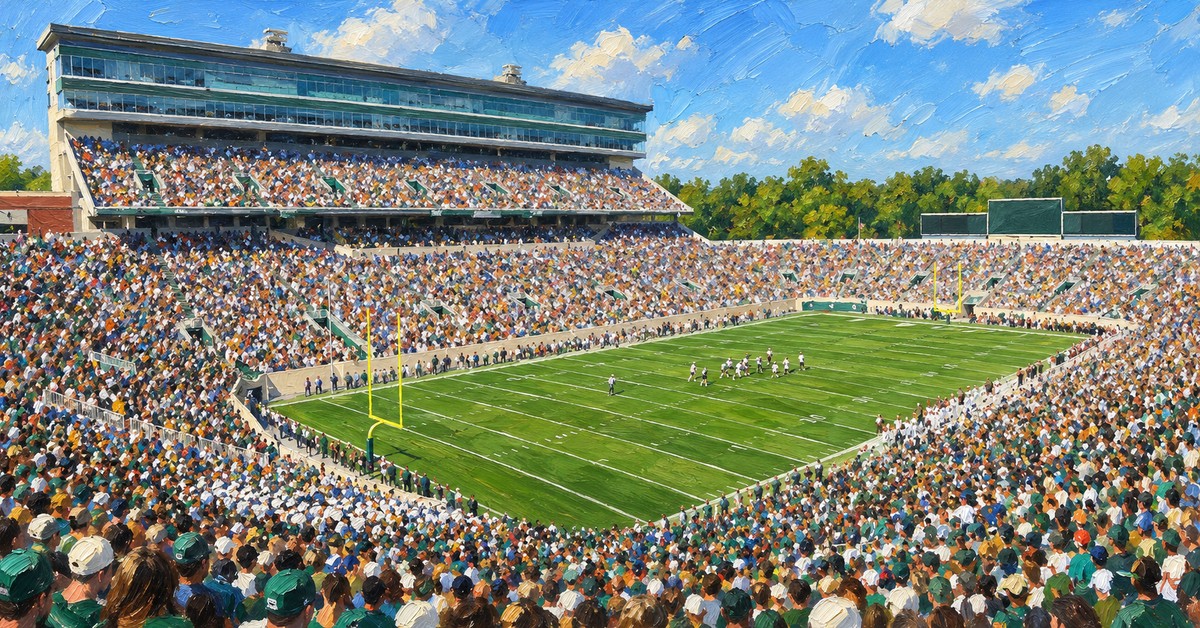
Oregon scored three touchdowns on passes covering at least 49 yards against Michigan. Michigan State stayed level with Washington until the final three minutes, then watched another close game slip away. That sets up the question for Friday: can the Spartans make the Ducks sustain drives, or will Dylan Raiola’s big throws keep taking the pressure off Oregon?
Oregon’s passing game has found its punch
The Ducks have won and covered the spread in three straight games, scoring 34 against Northwestern, 41 at Ohio State and 31 against Michigan. That’s a meaningful turnaround from the 10 points they managed at Illinois immediately before this run. The win in Columbus also gives Oregon something more useful than a comfortable home result: recent evidence that its offense can produce on the road.
Raiola threw for 341 yards and four touchdowns in the 31-7 win over Michigan. Jeremiah McClellan caught a 60-yard touchdown on the opening possession, Dakorien Moore scored from 59 yards just before halftime, and Dierre Hill Jr. added a 49-yard touchdown reception. Those scores came at different stages of the game, giving Michigan State several examples of how quickly one defensive mistake can undo an otherwise competitive stretch.
Oregon wasn’t just trading touchdowns, either. Michigan’s quarterbacks combined for 71 passing yards, and pressure helped force an incompletion on fourth-and-3 from the Oregon 3. The Wolverines did score on a 70-yard run, though. For Michigan State, that’s a reminder that finding a crease on the ground may be a more promising way to disrupt Oregon than asking its passing game to carry every possession.
Michigan State needs to finish what it starts
The Spartans’ 21-14 loss to Washington wasn’t a game in which they never threatened. They scored on their opening drive and converted third-and-20 on the way to another touchdown before halftime. Bryson Williams supplied both a 30-yard catch on the first scoring march and the touchdown catch that tied the game.
Then the points stopped. Cam Fancher threw an interception while trying to escape pressure late in the third quarter, Liam Boyd missed a 50-yard field goal after a recovered punt fumble, and Carson Gulker lost a fumble on the final possession. Michigan State had chances to move ahead or answer Washington; it couldn’t turn them into points. Against an offense with Oregon’s quick-strike ability, empty trips can make the next possession feel urgent before the scoreboard truly demands it.
There is a concrete way for the Spartans to steady the game. Brandon Tullis rushed for 86 yards against Michigan and 82 against Washington, with 25 and 21 carries, respectively. That recent production gives Michigan State a ground-game foundation to build on. Productive early-down runs would reduce the number of obvious passing situations and give the Spartans a better chance to keep possessions alive.
The spread asks Oregon to do more than control the game
DraftKings lists Oregon as a 16.5-point favorite, with the total at 44.5. The favorite’s case starts with the passing mismatch: we expect Oregon to gain about 87 more passing yards and 117 more total yards. That suggests the Ducks should have more opportunities to reach scoring range. Whether those trips end in touchdowns or field goals matters much more to this spread than simply winning the yardage battle.
Sharpest Bets Premium
Get our Oregon vs. Michigan State picks.
See our model's picks for this game, plus the projections and trends behind them. Use PREVIEW20 for 20% off Premium Monthly. New members who qualify get 3 days free.
Michigan State’s defense has also created a potential shortcut. The Spartans forced seven turnovers across their past three games, after forcing three in their first seven. A takeaway could erase an Oregon scoring opportunity and spare Michigan State’s offense a long field. But the Washington loss showed the other half of that equation: recovering a fumbled punt doesn’t help enough if the resulting possession produces no points.
The favorite becomes more appealing if Oregon keeps finding explosive touchdowns without giving possessions away. The underdog’s argument is stronger if Michigan State makes the Ducks drive the field and turns its own opportunities into scores. We wouldn’t treat Oregon’s winning streak alone as a reason to pay this price; the key is whether its big-play advantage creates separation rather than just territorial control.
The total turns on how the points arrive
Michigan State’s games have finished Under in eight of 10 outings this season, while Oregon’s have gone Over in six of 10. The contrast fits the recent results: the Spartans have scored 10, 15 and 14 points in their past three games, while the Ducks have topped 30 in each of theirs. This threshold brings those two very different scoring patterns together.
We expect Michigan State to finish with about 89 rushing yards. If the Spartans struggle to move the chains on the ground, their contribution to the total could stay limited. That supports the lower-scoring case—but it doesn’t settle it. Quick punts would also give Raiola more chances to attack, and Oregon just showed that it doesn’t always need a long possession to score.
For the Over to be worth taking, there needs to be a convincing route to Michigan State contributing points or Oregon repeatedly cashing in on explosive plays and favorable field position. The Under is more attractive if the Spartans can keep Oregon’s receivers in front of them while sustaining enough possessions to keep the Ducks off the field. That’s why the same defensive stop means different things here: forcing Oregon to settle for a field goal helps Michigan State stay within reach and slows the climb toward the total.
Watch the first few third downs
Watch whether Tullis can leave Michigan State with manageable third downs, and whether Oregon’s first deep completions become touchdowns or merely move the chains. Those details will tell us more than an early possession count. Visit the college football betting board to compare this matchup’s big-play-versus-possession tension with the other games on the slate.
Odds and projections are snapshots and can change. Wagering involves risk.
More matchups to explore


Unlock our Premium picks. Free.
Get our sharpest picks, team grades, and projected score in your inbox.