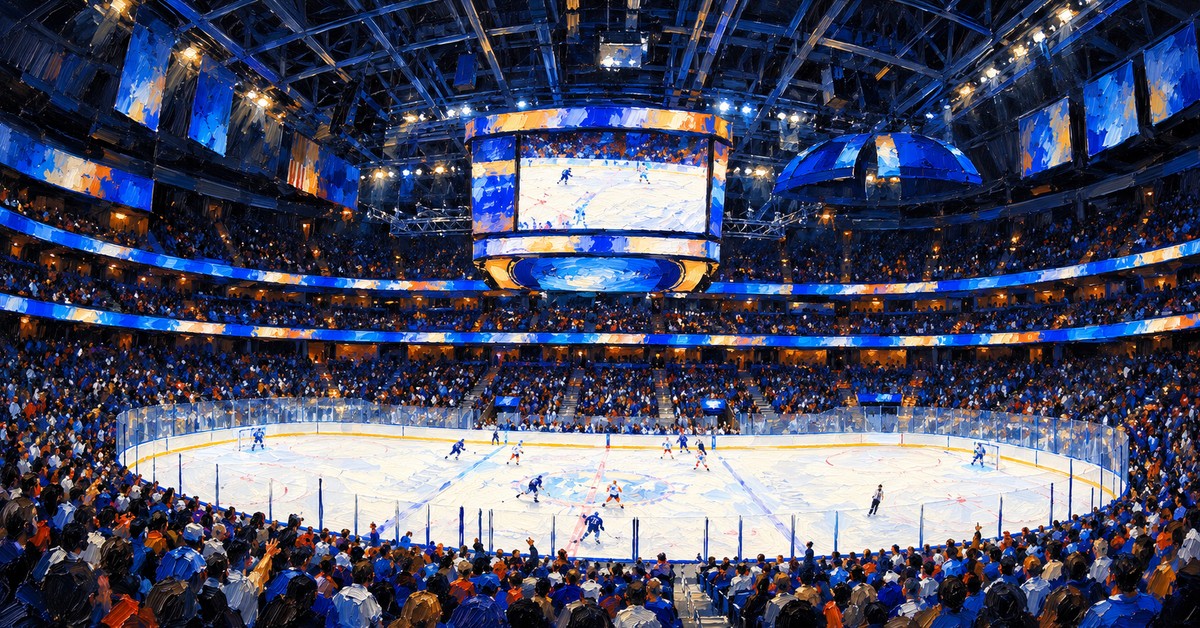
Jackson Blake broke the tie, then Carolina’s defensemen took over. That second-period burst in Sunday’s win over the Rangers gives Tampa Bay a clear problem to solve: stopping the Hurricanes means more than slowing Sebastian Aho and Andrei Svechnikov. Can Carolina keep getting offense from across its lineup if Andrei Vasilevskiy gets the Lightning’s net?
Carolina’s offense keeps finding another contributor
The Hurricanes have won eight of their last 10 games, including a 7-4 victory over Edmonton followed by Sunday’s 5-2 win in New York. Those two wins show their scoring range, but the 2-1 loss to Montreal immediately before them is worth remembering. Carolina can pile up goals without being immune to a tight game.
Against the Rangers, Blake finished a passing play with Taylor Hall and Logan Stankoven to put Carolina ahead midway through the second period. Alexander Nikishin and Sean Walker then scored 41 seconds apart later in the period. That sequence in the win over New York matters here because Tampa Bay can’t devote all its attention to the Hurricanes’ most recognizable forwards. The Hall–Stankoven–Blake combination supplied the go-ahead goal, and the blue line extended the lead.
Walker and Nikishin have now scored in back-to-back games. For Tampa Bay, tracking those defensemen as they join the attack will be an important part of keeping Carolina’s possessions from turning into sustained pressure.
Tampa Bay’s last result isn’t its whole defensive story
The Lightning fell 6-2 to Buffalo on Sunday, but they’re still 7-3 over their last 10 games. Their loss to the Sabres included a conceded 2-on-1 goal and a 5-on-3 power-play goal during a damaging second period. Tampa Bay needs cleaner coverage and fewer situations that give Carolina room to build a lead.
There’s also an important distinction in net: Dennis Hildeby played against Buffalo. Vasilevskiy is the likely starter here, though neither team’s goalie is confirmed. In Vasilevskiy’s five most recent appearances, he stopped 117 of 128 shots for a .914 save percentage. He allowed one goal on 24 shots against Edmonton in his latest outing. A similar performance would make Carolina work much harder to turn its pressure into goals.
Pyotr Kochetkov, Carolina’s likely starter, stopped 79 of 91 shots for an .868 save percentage across his five most recent appearances. His latest was the Edmonton game, when he allowed four goals on 15 shots and Carolina still won. That’s the opening for Nikita Kucherov, Brayden Point and Jake Guentzel: Tampa Bay may not need to match the Hurricanes shot for shot if it finishes more of its opportunities.
Moneyline: pressure versus finishing
DraftKings lists Carolina at -130 and Tampa Bay at +110, with the total at 6.5. The Hurricanes’ case starts with their ability to generate offense beyond one line. We expect about 31 shots from Carolina and 29 from Tampa Bay, a modest volume advantage rather than an overwhelming one.
Sharpest Bets Premium
Get our Hurricanes vs. Lightning picks.
See our model's picks for this game, plus the projections and trends behind them. Use PREVIEW20 for 20% off Premium Monthly. New members who qualify get 3 days free.
Paying Carolina’s price makes sense only if that extra pressure creates enough repeat attacks to outweigh Tampa Bay’s potential advantage in net. The recent scoring depth supports that argument; the narrow projected shot gap keeps it from being automatic. If Vasilevskiy starts and Tampa Bay avoids the coverage breakdowns that hurt against Buffalo, there’s a sound reason to pass on laying the favorite’s price.
The Lightning’s plus-money case is different: keep the shot deficit manageable, get steadier goaltending and let their scorers decide a close game. That becomes less convincing if Carolina’s second line and defensemen keep forcing Tampa Bay to defend several threats on the same shift.
Total: can the chances become seven goals?
The 6.5 threshold puts finishing and goaltending at the center of the discussion. Carolina’s last two games produced 11 and seven goals, but each team’s last 10 games split evenly between overs and unders against their stored totals. Those results don’t describe a matchup that consistently turns into a shootout.
The case for taking the over is that Carolina’s scoring depth carries over and Tampa Bay exploits the uneven stopping Kochetkov has shown in his recent sample. The case for passing is Vasilevskiy: Carolina can win the shot count without producing a big scoring night. Our shot expectations suggest neither team should be starved of attempts, but volume alone doesn’t establish that those attempts will become seven goals.
For the under, the question is whether Tampa Bay can remove the easy offense—odd-man rushes, uncovered attackers and extended power-play situations—while getting its expected goaltending. If those breakdowns continue, relying on saves alone becomes a much tougher proposition. Confirming who starts in both nets matters to this threshold, not just to the moneyline.
Watch the second wave
Watch what happens after Tampa Bay handles Carolina’s first attack: do the Lightning get the puck out, or do Blake, Hall and the defensemen keep the shift alive? That’s where this matchup could tilt. Before settling on a wager, visit the NHL betting board to compare this game’s prices with the rest of the slate as the goalie picture becomes clearer.
Odds and projections are snapshots and can change. Wagering involves risk.
More matchups to explore



Unlock our Premium picks. Free.
Get our sharpest picks, team grades, and projected score in your inbox.