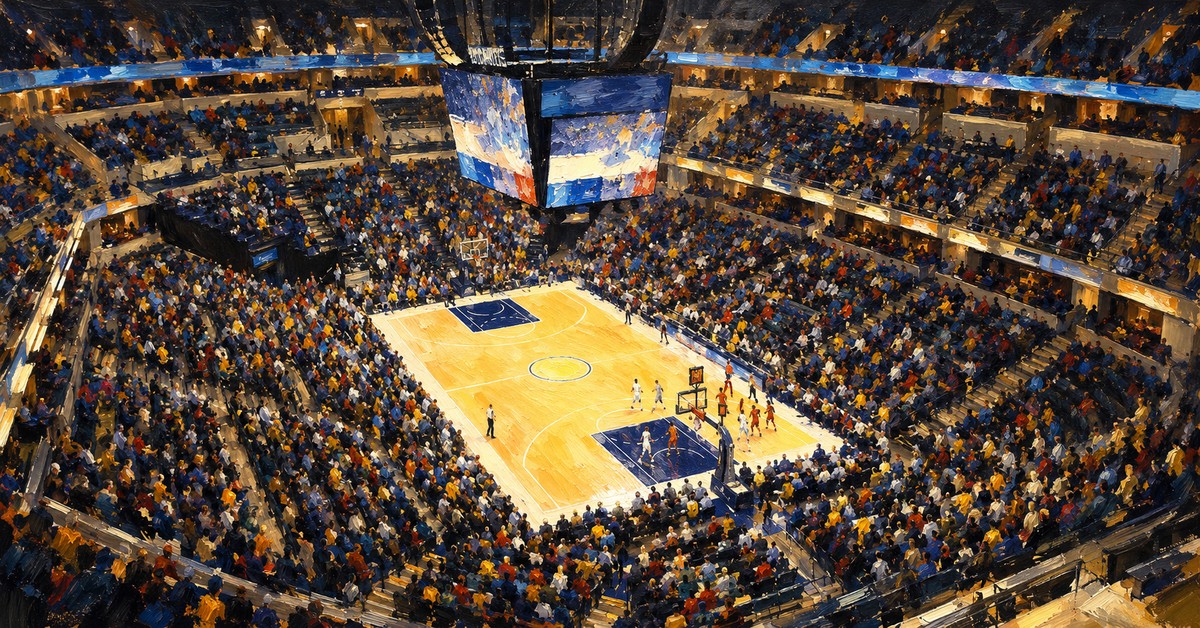
Karl-Anthony Towns kept his double-double streak going Wednesday, but New York couldn’t finish the job against Cleveland. Indiana did finish, opening the fourth quarter with 14 unanswered points to beat Washington. That sets up the question for this matchup: can the Pacers keep producing through Pascal Siakam and Ivica Zubac when the Knicks make them work for baskets, or will New York build enough separation that another tight finish never arrives?
New York needs more than another comeback
The Knicks had won four straight before their 115-107 loss to Cleveland. They erased a 10-point fourth-quarter deficit to tie the game, then watched James Harden hit the go-ahead 3-pointer with 4:21 left. Cleveland followed with baskets from Evan Mobley and Jarrett Allen to pull away. New York’s response was encouraging; its inability to get the next few stops was the problem.
Jalen Brunson scored 27, while Towns supplied 21 points, 11 rebounds and eight assists. That was Towns’ 11th consecutive double-double to begin the season, matching Willis Reed’s franchise record. His passing matters here as much as his scoring: if Indiana sends extra help toward the ball, New York needs those possessions to end with an open teammate rather than a difficult rescue shot.
There’s also evidence that the Knicks can win without a scoring race. Their recent victories included holding Milwaukee to 85 points and Cleveland to 97. But winning and creating a comfortable margin haven’t always traveled together: New York is 6-4 with four spread covers in its last 10 games, while Indiana is 3-7 with six covers over its last 10. The Pacers’ losses haven’t consistently made them an easy opponent at the betting window.
Indiana’s frontcourt gives it a way to answer
Siakam and Zubac combined for 48 points in the Pacers’ 114-101 win over Washington. Siakam scored 28 despite shooting 7-for-17 because he made all 12 of his free throws. Zubac added 20 points and 12 rebounds, and Andrew Nembhard finished with 17 points and 10 assists. That’s a useful mix for this matchup: Indiana doesn’t need every possession to end with a perimeter jumper if it can reach the line and get productive touches inside.
The fourth-quarter burst was the decisive response after Washington had erased Indiana’s third-quarter lead. Still, repeating Siakam’s perfect night at the line is a lot to ask. Watch whether the Pacers keep earning those attempts and finding Zubac near the basket, rather than simply expecting the same scoring output against a different opponent.
Indiana also has two availability questions to follow. Aaron Nesmith is questionable with a knee injury, while T.J. McConnell is probable with a right hamstring strain. Nesmith’s availability matters to Indiana’s options against New York’s perimeter scorers. McConnell’s designation leaves another ballhandling option in play, but neither report establishes how many minutes either player will handle.
Sharpest Bets Premium
Get our Knicks vs. Pacers picks.
Unlock our model's best bets for this matchup, plus projections, trends, and matchup analysis. Start with a free 7-day trial, then save 20% every month with code PREVIEW20.
The spread asks New York to sustain its advantage
DraftKings has the Knicks favored by 7.5 points, with the total at 219.5. For the spread, the important distinction is whether New York can control enough consecutive possessions to pull away—not simply whether Brunson and Towns can produce.
We project 45.4 rebounds for New York against 41.5 for Indiana, with 12.5 Knicks turnovers against 14.1 for the Pacers. Those are two potential sources of separation: finishing defensive possessions and avoiding empty trips. The rebounding projection is a total-rebound comparison, not a forecast of offensive boards, but it identifies a contest Indiana can’t afford to lose badly.
The case for laying the points gets stronger if New York turns that cleaner possession profile into sustained pressure. The reason to pass is Indiana’s ability to keep answering through Siakam, Zubac and Nembhard, forcing the Knicks to execute late. Taking the points requires confidence that those answers will survive beyond one good quarter; Indiana’s recent cover record alone doesn’t settle that question.
219.5 leaves less room for an automatic Under argument
Both teams have gone Under in seven of their last 10 games. But Indiana’s posted totals in that stretch were all higher than this one, ranging from 226.5 to 239.5. A history of staying below those numbers doesn’t automatically make 219.5 generous.
For this threshold, New York’s defensive control and Indiana’s free-throw production pull in different directions. The Knicks have recently shown they can hold opponents below 100; Siakam just showed how trips to the line can keep points coming through an uneven shooting night. Wednesday’s Knicks game finished with 222 combined points, while Indiana’s finished with 215—results on opposite sides of this number.
An Under needs New York to make Indiana’s half-court possessions difficult without repeatedly sending scorers to the stripe. An Over needs more than the Pacers hanging around: efficient interior finishes, free throws and enough scoring from both teams have to carry the game past a lower bar than Indiana has recently faced. That’s why the quality of Indiana’s scoring chances matters more here than the recent Under count.
Watch the possessions after the first stop
Keep an eye on whether Indiana finishes defensive possessions against Towns, then gets Siakam or Zubac a useful touch at the other end. If that sequence holds up, New York has a much harder job creating separation. Visit the NBA betting board to compare this spread and scoring threshold with the rest of the slate as Indiana’s availability picture develops.
Odds and projections are snapshots and can change. Wagering involves risk.
More matchups to explore



Unlock our Premium picks. Free.
Get our sharpest picks, team grades, and projected score in your inbox.